
Is SaaS Dead? The End of Handcrafted Software
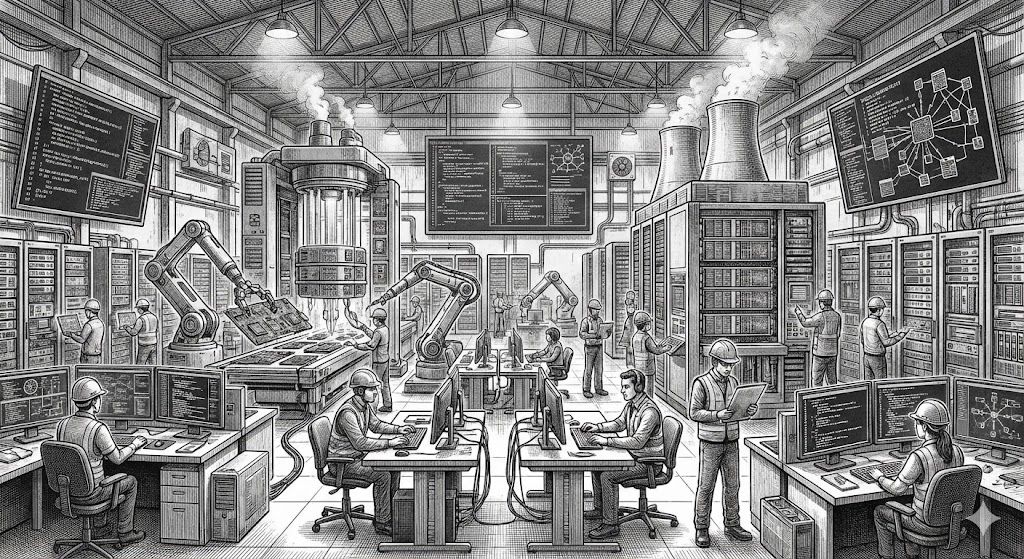
February 2026 will probably be remembered as the month the software industry lost its innocence. For the past decade, we have lived by an unquestioned mantra: "Software is eating the world." But what happens when artificial intelligence starts eating software?
This week, financial markets have reacted with unusual volatility to the launch of new Anthropic tools and their Computer Use capabilities. Major SaaS companies have seen their stock market valuations fall over a very specific fear: that licensing software per human user, commonly known as seat-based pricing, could become obsolete.
A recent CNBC article (read the analysis here) examines this sell-off. Investors are asking: if AI can operate a computer and carry out complex workflows, who will pay for hundreds of licences so that humans can click through screens?
Technology leaders such as Jensen Huang (Nvidia), however, have called this panic "illogical". They are right. Software is not dying, but the way it is produced and consumed is changing radically.
We are facing an unprecedented shift, from craftspeople writing code to architects of a new industrial reality.
1. From Craftsmanship to Software Factories
Until recently, software development was almost a craft. Engineering teams built every component, function and interaction by hand. We took pride in the quality of code written by people.
Today, that view is romantic but inefficient. At MineTechnology, we believe we have become software factory operators.
In this new era, generating code is no longer the bottleneck. AI does it instantly. The real value now lies in building processes. We need to coordinate production lines where continuous improvement, research and development, and deployment are ongoing and often autonomous. The question has shifted from "How do I write this function?" to "How do I design the system that will write and maintain these functions?"
2. The MCP Revolution
The most disruptive technical change is the standardisation of the Model Context Protocol (MCP), which allows models to "understand" our data without a visual interface. This makes us question the need to invest so heavily in visual user experience when the future points towards Agent-as-a-Service.
Still, we need to be cautious and realistic. Although change is inevitable, it is neither immediate nor complete today.
However advanced they may be, current models still face critical barriers involving reliability, security, performance and context limits. An agent can fail, hallucinate or struggle to process the full complexity of a legacy system in real time. We know this technology is still maturing and that human oversight remains essential.
We also know that we are getting closer every day. The pace of improvement is exponential, and today's context limits will become tomorrow's surpassed benchmarks. The shift towards less visible interfaces, through chat or direct integrations, is a question of when.
Conclusion: The World Needs More Software
The paradox of artificial intelligence is that it multiplies the need for code. Every new AI agent needs tools to operate. Every automated business process requires a robust, secure and scalable API. We are moving towards a future of unlimited demand for digitalisation.
The problem is that we cannot meet that demand with yesterday's methods. We can no longer afford to work as craftspeople. The speed the market demands forces us to evolve.
We need to establish ourselves as true software factories, where development processes are industrialised, improvement is systematic and production capacity scales at the pace of AI.
SaaS is not dead. It has moved from a craft to the heavy industry of the 21st century.